Evidence grade — AMR problem and mechanism: SOLID. Product-specific outcomes in livestock: EMERGING — hedge carefully. No disease names, no drug claims.
Key takeaways
- —AMR was linked to ~1.27 million deaths in 2019; livestock antibiotic use is a recognized contributor.
- —The durable answer is keeping animals healthy enough to need fewer antibiotics — prevention over treatment.
- —RETURN's animal products support gut health and hygiene; they are not drugs and make no disease claims.
Antimicrobial resistance is one of the most serious challenges in modern medicine — and livestock agriculture is part of the story. A large share of global antibiotic use occurs in animal production, and the consequences reach far beyond the farm gate. The scientific and commercial shift toward alternatives that support animal health without driving resistance is both necessary and real.
The scale of the AMR emergency
A 2022 study in The Lancet (Murray et al.) estimated that approximately 1.27 million deaths were directly attributable to antibiotic-resistant bacterial infections in 2019. The WHO considers antimicrobial resistance one of the greatest threats to global health, food security, and development.
The '10 million deaths per year by 2050' figure is widely cited. It is a modeled projection under specific assumptions, not a measured outcome — RETURN will say 'the trajectory is serious and the trend is clear,' not '10 million people will die.' The underlying concern is real regardless of which number is used.
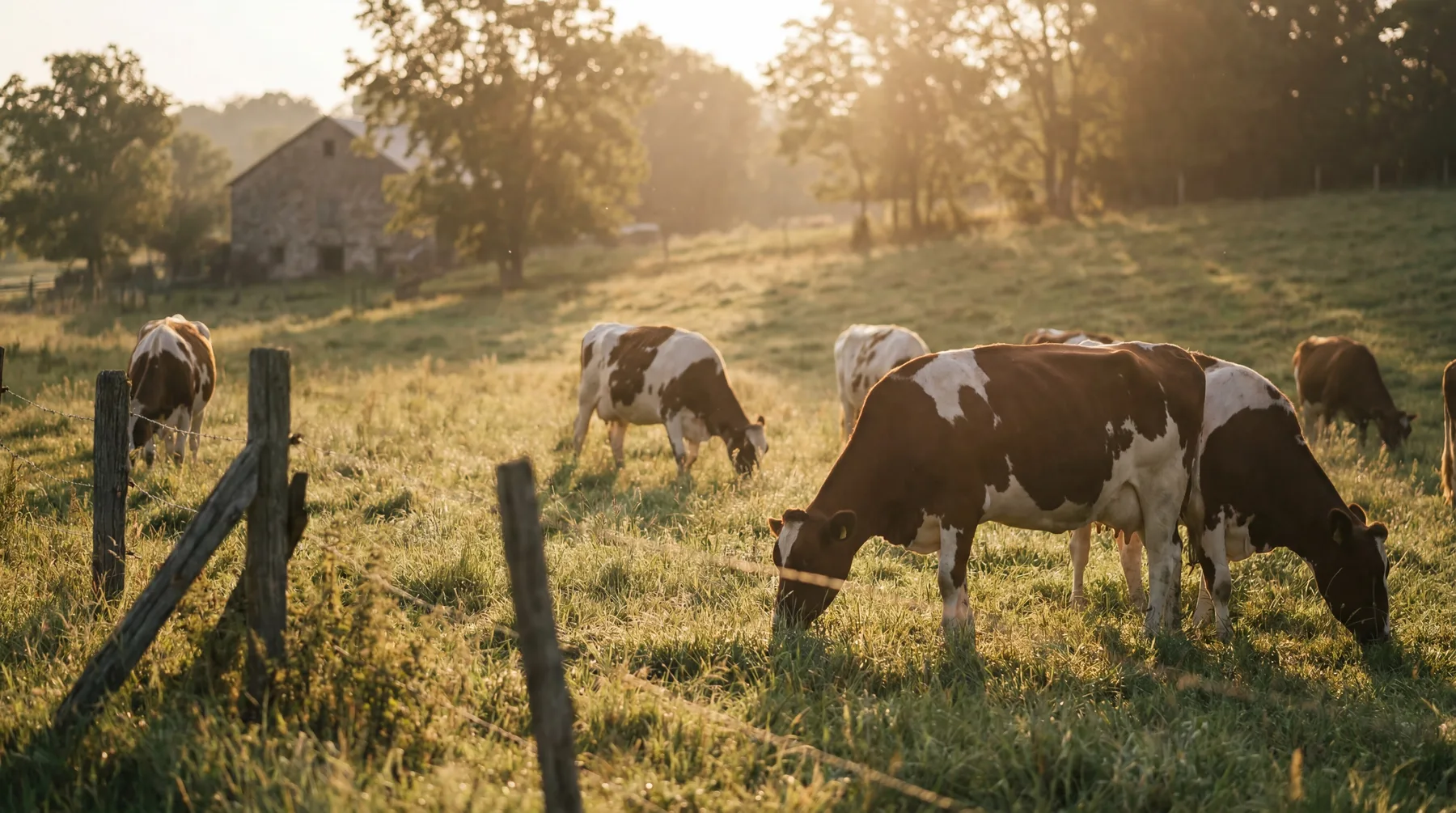
A recognized contributing factor: extensive antibiotic use in livestock production, where antibiotics have sometimes been used not to treat disease but to promote growth. This practice is being restricted or banned in many markets — creating both regulatory pressure and commercial opportunity for biological alternatives.
deaths directly attributable to antibiotic-resistant infections (2019)
Extensive antibiotic use in livestock is a recognized contributing factor — and it is being restricted in many markets, creating room for biological alternatives.
Source: Murray et al., The Lancet 2022.
Why resistance develops — the biology
Bacteria evolve. Every antibiotic exposure is selection pressure: bacteria that survive reproduce; bacteria that don't, don't. Each generation of survivors is, by definition, more resistant than the last. The more antibiotics used, the faster resistant strains develop — and they spread.
Resistant bacteria move through the environment: from livestock to soil via manure, from soil to groundwater, from water to food crops, and ultimately into the human medicine pool. This is not a future risk. It is a documented present phenomenon. It is also why AMR is a One Health problem — it is a loop that connects the farm, the environment, and the clinic.
The shift in thinking — prevention over treatment
The conventional model: wait for disease, treat with antibiotics. The regenerative model: support gut health, immune function, and microbial balance so animals are less vulnerable in the first place. This is prevention built from biology, not chemistry — and it is increasingly what regulators, procurement bodies, and sophisticated buyers want to see.
Phytogenic compounds (plant essential oils, organic acids) have been studied for their ability to modulate gut microbial populations, support gut barrier integrity, and maintain feed palatability and efficiency. These are structure/function claims — describing what the product is designed to support, not what disease it treats.
What RETURN's approach is built on
PFA (Phytogenic Feed Additive): a plant essential oil and organic acid formulation designed to support gut microbial balance and gut barrier integrity in livestock. In studies, these compounds can selectively encourage beneficial gut bacteria while making the gut environment less hospitable to opportunistic pathogens.
Udder Care: natural, alcohol-free udder sanitation designed to support udder hygiene before and after milking. We describe it as hygiene support, not disease prevention — the distinction is legally and scientifically important.
Together, these products sit on the animal link of the One Health chain: healthier animals, managed with less antibiotic reliance, producing food with fewer residues. This is RETURN's contribution to the AMR response — not a drug, and not marketed as one.
Language discipline — how RETURN talks about this
Claims we make
- Supports gut health and microbial balance in livestock
- May contribute to lower antibiotic reliance when animals are healthier
- Designed to support natural immunity and feed efficiency
- Part of a whole-animal approach to raising animals with less medicine
Claims we do not make
- Prevents or treats any named disease
- Replaces antibiotics (too absolute)
- Eliminates gut pathogens (pesticidal / drug claim)
- Prophylaxis (a regulatory drug term — do not use)
- Any human health benefit claim
Sources cited
Murray et al. The Lancet 2022 (AMR attribution study); WHO AMR global action plan; Windisch et al. 2023 phytogenic livestock review; WOAH antibiotic use in animals reports.
From science to soil
The products built on this science
PFA
Livestock & aquaticSupports immunity and feed conversion so animals need fewer antibiotics.
Udder Care
Dairy sanitationAlcohol-free pre- and post-milking sanitation that supports udder hygiene.
The science is one part of the return.
RETURN is available now. If you are a farmer, distributor, or investor, we would like to hear from you.